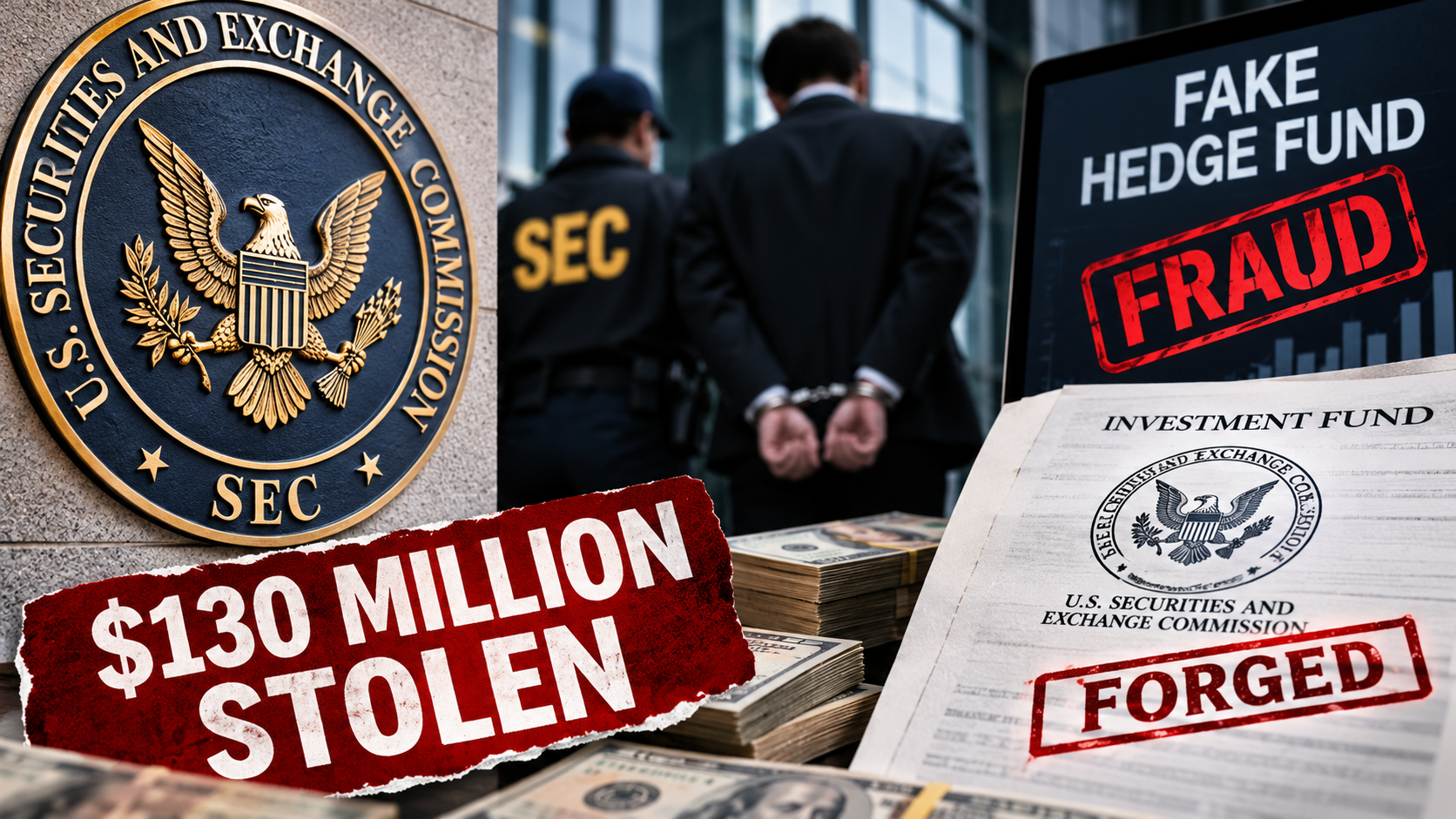
WASHINGTON — The Securities and Exchange Commission has charged two entities with orchestrating a $130 million fraud that used fabricated SEC registration certificates, false regulatory filings, and promises of AI-powered trading signals to lure tens of thousands of retail investors across more than 40 U.S. states, the agency announced this week.
The complaint, filed October 29 in the Northern District of California, names BG Wealth Sharing Ltd and DSJ Exchange Pty Ltd—both foreign-operated but incorporated in Colorado—along with their principals, alleging they ran a "wealth-sharing program" from at least October 2025 through June 2026 that promised extraordinary, risk-free returns.
A Facade of Legitimacy
According to the SEC, BG Wealth marketed itself as "the world's largest hedge fund" and claimed to be registered with the SEC as an investment adviser, while DSJ Exchange purported to be a licensed and secure crypto trading platform. Neither claim was true.
The defendants allegedly filed a Form ADV and a Form D with the SEC—documents that are publicly viewable but do not constitute SEC approval or licensing—and then pointed investors to the agency's own databases as supposed proof of legitimacy. They went further, creating fake certificates bearing the SEC's official seal.
"The defendants created the appearance that they were legitimate entities," said Laura D'Allaird, Chief of the SEC Enforcement Division's Cyber and Emerging Technologies Unit. "They sustained the ruse by displaying fake certificates with the SEC's seal and making periodic payments to certain investors—a Ponzi-like tactic—while misappropriating the remaining funds".
The AI Trading Mirage
The scheme's central pitch was a set of proprietary "SI-generated signals"—allegedly powered by artificial intelligence—for crypto asset trading. Investors were told the signals carried a 99.6% accuracy rate and could deliver returns of at least 60% per month, with the promise that they could "double their principal within 40 days".
In reality, DSJ Exchange's platform displayed fabricated transactions, profits, and account balances, according to the complaint. The SEC alleges the defendants misappropriated the vast majority of investor assets, returning no more than $25 million in Ponzi-like payments to sustain the operation.
A Multi-Level Marketing Engine
The scheme relied on a 12-level referral system to fuel growth. Investors could unlock additional trading signals, bonuses, commissions, and "transaction volume dividends" by recruiting new participants. One promoter in Northern California reportedly rose to Level 7 with roughly 5,000 downstream investors and opened a physical office.
Between March and mid-June 2026, the defendants collected over $130 million from more than 223,000 blockchain addresses. When investors attempted withdrawals, they were hit with fees as high as 20% and multi-day delays. Eventually, DSJ Exchange blocked withdrawals entirely and demanded additional "tax" payments from investors seeking access to their funds.
Warnings Ignored
The operation persisted even after at least seven foreign securities regulators issued public warnings and state authorities in Alaska, Hawaii, Oklahoma, Texas, Utah, Washington, and Wisconsin issued cease-and-desist orders. After the FBI seized a BG Wealth website domain in April 2026, the purported founder blamed a "Chinese hacker" and urged investors to remain calm, the SEC alleges.
The complaint describes BG Wealth's listed principal office as a PostNet virtual mailbox, its U.S. phone number as disconnected, and mail sent to its filing addresses as returned undeliverable. The purported founder's identity is described as an assumed name.
The SEC seeks permanent injunctions, disgorgement with prejudgment interest, and civil penalties. The agency has issued investor alerts warning that scammers are exploiting SEC exempt reporting adviser filings to create a false impression of regulatory approval.