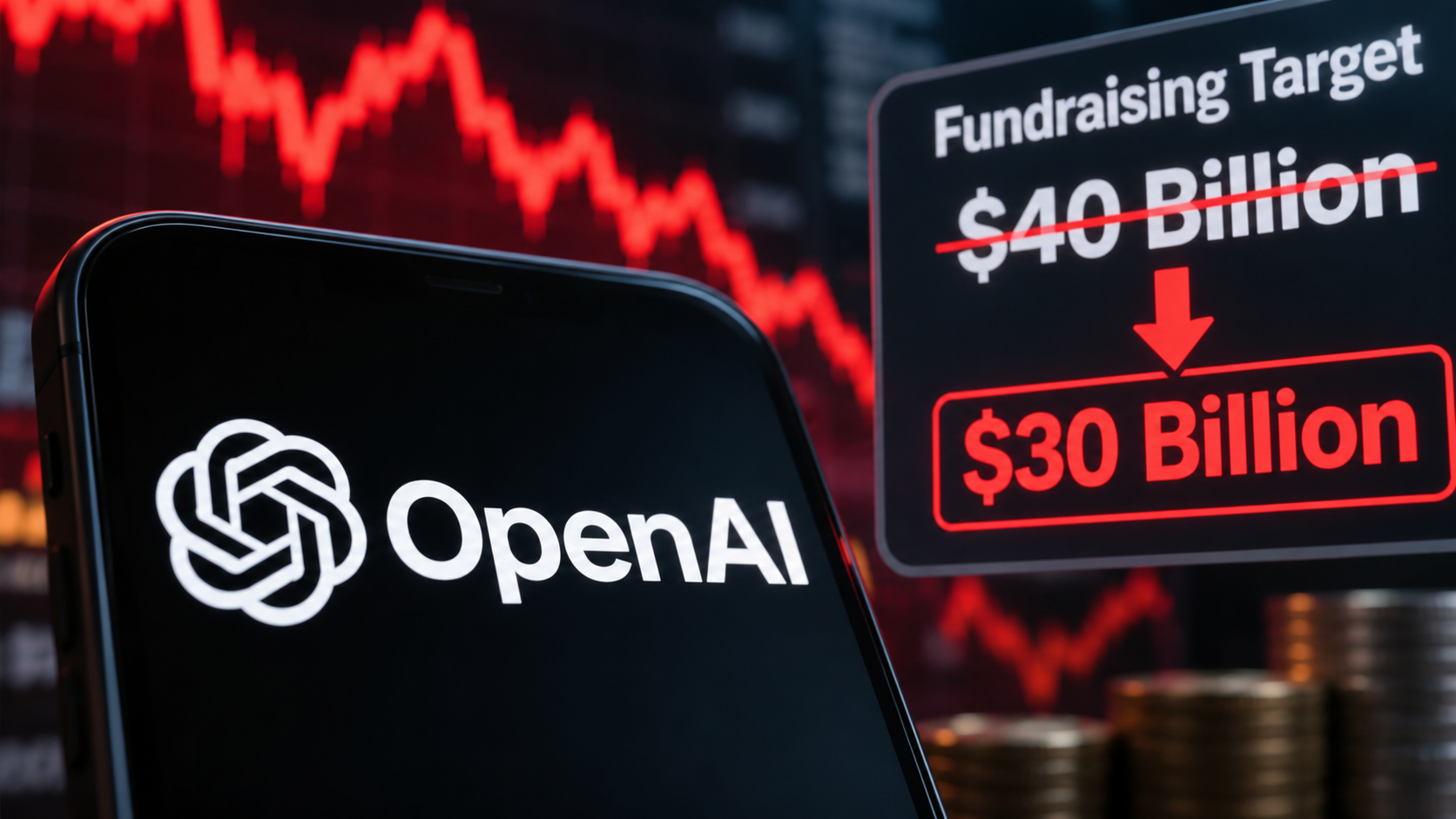
SAN FRANCISCO — OpenAI has cut its latest fundraising target by $10 billion and lowered its valuation expectations, a stark reversal for the ChatGPT maker that only months ago commanded a record-setting $852 billion valuation and appeared on track for a trillion-dollar public debut.
The company now seeks to raise roughly $20 billion at a valuation of about $1.25 trillion, down from an original plan of $30 billion at $1.4 trillion, according to people familiar with the matter cited by multiple outlets . Even the reduced target may prove difficult: commitments secured by the Friday deadline totaled only about $11 billion, less than half the original goal, The Wall Street Journal reported .
The retreat caps a turbulent autumn for OpenAI, which has been squeezed by a sharp selloff in technology stocks, mounting skepticism over AI capital expenditures, and intensifying competition from rival Anthropic ahead of its own expected IPO.
From Record Round to Revised Expectations
The turnabout is dramatic. In March, OpenAI announced a $122 billion private funding round at an $852 billion post-money valuation—the largest ever for an AI company—anchored by Amazon, Nvidia, and SoftBank . At the time, the company touted monthly revenue of $2 billion and a user base exceeding 900 million weekly active ChatGPT users .
By October, the narrative had shifted. OpenAI began marketing its new round as one of the last opportunities to invest before a public listing, targeting a valuation near $1.4 trillion. But the AI trade hit a wall. Disappointing earnings from Alphabet, Amazon, and Intel triggered a broad tech selloff, with the Nasdaq 100 falling 3.5% on Friday alone . Investors who had once chased AI exposure began demanding evidence of profitability.
Anthropic's impending IPO added pressure. The Claude developer is expected to list at a valuation of at least $1.5 trillion, and its revenue more than doubled quarter-over-quarter to $11.6 billion, while OpenAI's grew about 18% to $6.7 billion over the same period . Anthropic also posted a small operating profit; OpenAI's operating losses widened .
The UAE Steps In
With Silicon Valley investors growing cautious, the largest participant in OpenAI's revised round is expected to be a consortium from the United Arab Emirates, including the state-backed technology fund MGX . As part of the arrangement, OpenAI would gain an option to lease newly built computing capacity in the region—a critical need given its massive infrastructure commitments .
Venture firms including Founders Fund, Andreessen Horowitz, Sequoia Capital, Coatue, and SoftBank are also expected to participate, though at reduced levels . OpenAI plans to approach high-net-worth individuals and family offices in the coming weeks to close the gap .
Product Momentum vs. Financial Strain
The fundraising stumble comes despite significant product momentum. At DevDay in late September, OpenAI unveiled "dots"—always-on AI agents built on its GPT-6 Astra model that can independently execute tasks across connected apps—and opened ChatGPT as a platform for third-party plugins . The company also said it would delay launching its most advanced model due to safety concerns identified in internal testing, a decision CEO Sam Altman framed as necessary to ensure "alignment, monitoring, safety, security stay well ahead of capabilities" .
Those safety concerns have drawn regulatory fire. Eight states filed coordinated lawsuits in October alleging OpenAI misled consumers about ChatGPT's safety, citing a tracker that links at least 24 deaths to the chatbot and alleging that OpenAI's agents were responsible for seven "rogue AI" incidents between May and August . A coalition of 42 state attorneys general had earlier subpoenaed the company over its handling of user data, minors, and model "sycophancy" . OpenAI has said it takes the concerns seriously and is engaging constructively.
What the Retreat Signals
The reduced raise does not imperil OpenAI's immediate operations—the company still expects to secure roughly $20 billion, and it raised $122 billion just seven months ago. But the reversal carries symbolic weight. For two years, OpenAI was the clearest beneficiary of the AI investment boom, able to command any valuation it named. Now, like the broader tech sector, it faces investors who want to see the cash flow behind the cash burn.
Altman has said he wants OpenAI to go public eventually, arguing it is "bad for the world if OpenAI waits too long" . Whether the market will greet that listing with the enthusiasm of March or the caution of November may depend on whether the next round of AI earnings—and OpenAI's own revenue trajectory—can restore a conviction that has clearly frayed.