
A trillion-dollar season, if the forecasts hold
Retailers head into Black Friday on November 27, 2026, expecting the first U.S. holiday season to top $1 trillion. The National Retail Federation forecasts November and December sales will rise 4.2% to $1.013 trillion, faster than last year's 3.1% gain to $972 billion.
The calendar helps. Thanksgiving falls on November 26 and Cyber Monday on November 30, pulling the biggest online shopping day back into November after it landed on December 1 last year.
But the optimism comes with caveats. Shoppers are spending, yet they are watching prices closely, hunting for deals and expecting the economy to cool.
What the forecasters expect
The major outlooks all point to growth, with Black Friday gaining ground on Cyber Monday online.
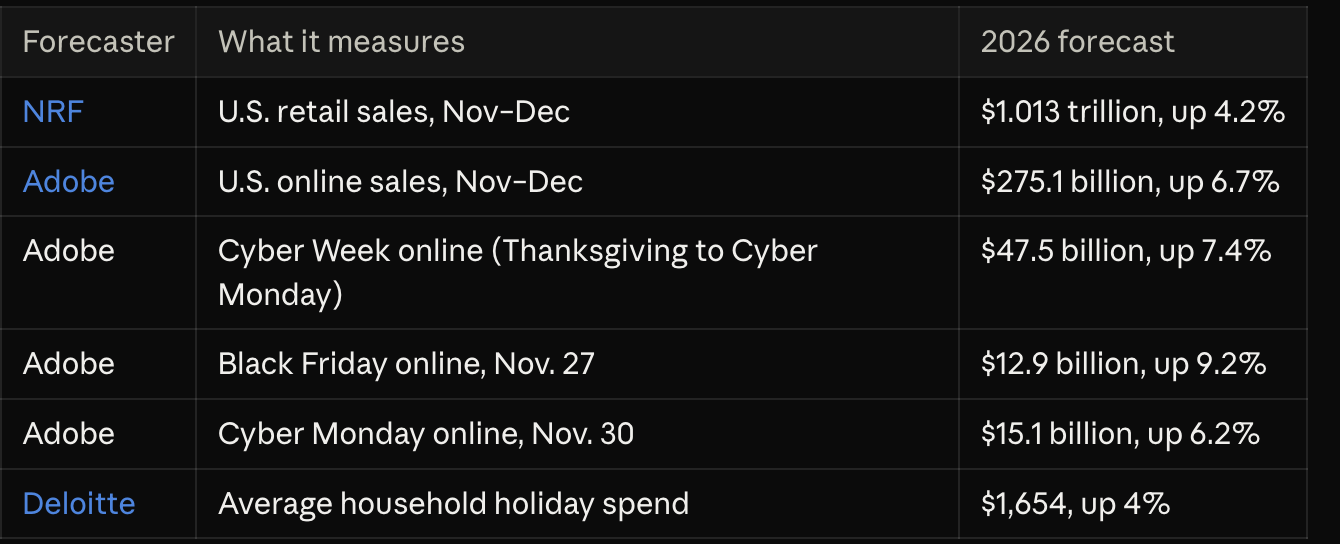
Adobe expects Black Friday to grow faster than Cyber Monday, helped by the season's deepest discounts on TVs, apparel and appliances. Cyber Monday is still set to be the first U.S. day with more than $15 billion in online sales.
Retailers are staffing up carefully. NRF expects 325,000 to 375,000 seasonal hires, roughly in line with last year's 356,000, reflecting what its chief economist calls a low-hire, low-fire job market.
Forecasts can miss. NRF predicted 3.7% to 4.2% growth for 2025, and sales rose 3.1%.
Four forces shaping Black Friday
1. Higher prices are inflating the totals. NRF expects core goods inflation to average 2.5% this year, up from 1.6% in 2025. It says only about half of its projected growth will come from shoppers actually buying more. Higher diesel and memory-chip costs are putting pressure on electronics, a key gift category.
2. Shoppers are cautious and deal-driven. In Deloitte's survey, 57% of consumers expect the economy to weaken in the next six months, and 79% expect higher prices. NRF found 64% plan to wait for Thanksgiving weekend sales to do most of their shopping, and many plan to use coupons and compare prices online more often.
3. Younger shoppers are leading. For the first time in Deloitte's survey history, Gen Z and millennials are expected to account for half of holiday spending. Online purchases are set to make up 55% of retail budgets.
4. AI is becoming a shopping assistant. Adobe projects traffic to U.S. retail sites from AI tools will jump 130% this season, including a 95% rise on Black Friday. Mobile is set to drive 57.4% of online holiday spending, and buy now, pay later is expected to fund $807 million in Black Friday orders.
What it means
For retailers, the winners are likely to be those that compete on clear value rather than just the lowest price. That means sharp Black Friday doorbusters, fast mobile checkout, and product listings that AI shopping tools can find and recommend. With hiring flat, smooth fulfillment matters more than ever.
For shoppers, waiting for Thanksgiving weekend should pay off, especially on TVs, apparel and appliances. Comparing prices across sites and setting a budget before the sales start can help stretch dollars further.
The first real test comes in four weeks. Black Friday and Cyber Monday results will show whether the trillion-dollar forecast is on track or another season that falls short.