
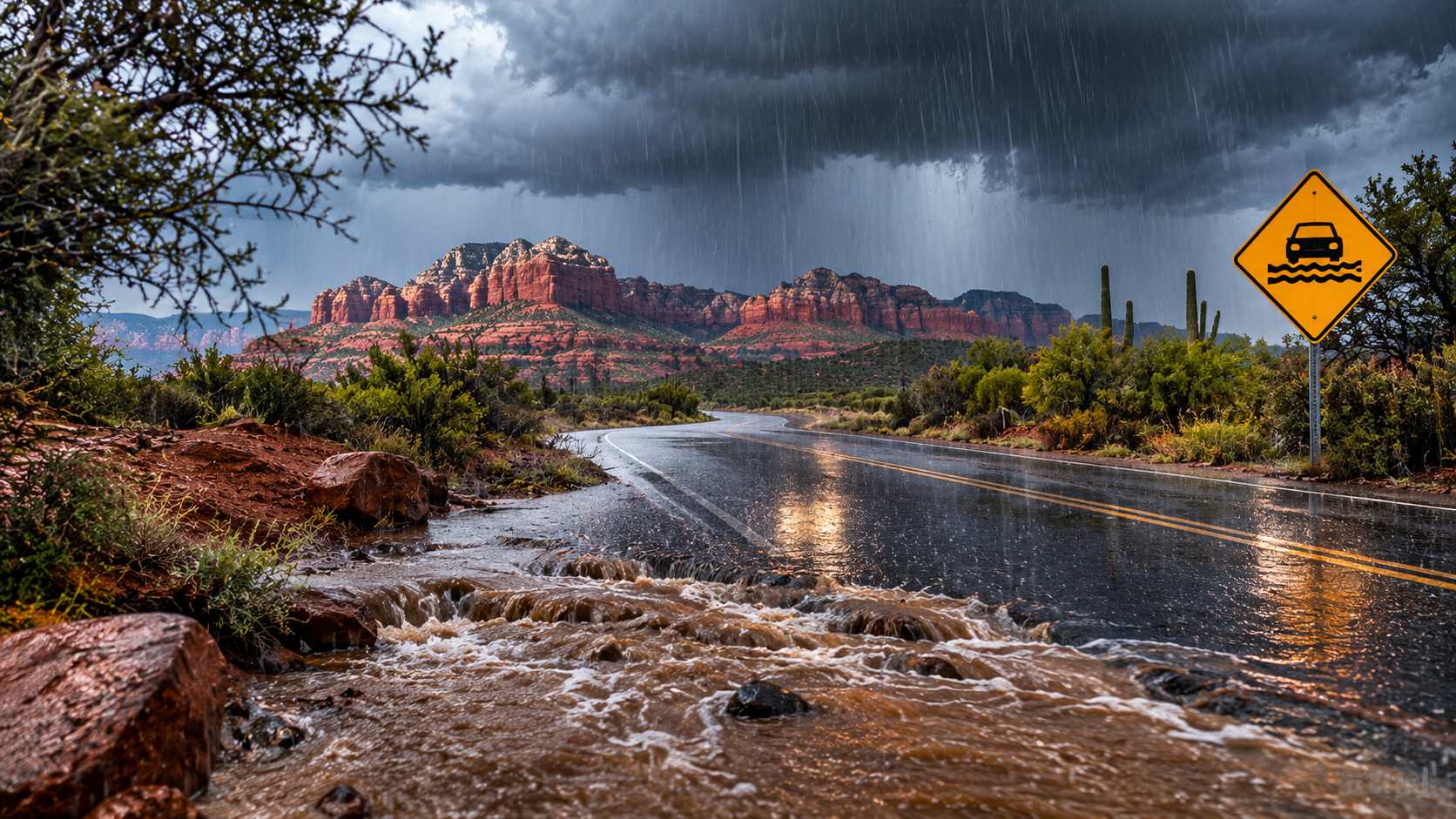
Up to 4 more inches of rain on saturated ground
The National Weather Service has a Flood Watch in effect for all of northern and central Arizona through late Sunday night, November 1. Forecasters warn that flash flooding is possible as heavy rain falls on ground that is already soaked.
Rain and isolated thunderstorms began Saturday night and are expected to continue into the early hours of Monday. An additional 1 to 4 inches of rain is possible across the watch area.
The storm is affecting much of the state. Separate flood watches cover the Phoenix metro area, southeastern Arizona including Tucson, and parts of northwest Arizona near Lake Havasu and Lake Mead. NWS Phoenix says an atmospheric river ahead of the weather system is pushing well-above-normal moisture into the region.
Where the danger is greatest
Flash floods in Arizona can arrive fast and with little warning, even miles from where the rain is falling. The NWS says the highest risk is in:
Creeks and normally dry washes, which can fill with fast-moving water within minutes.
Swimming holes and slot canyons, where water can rise with no way out.
Recently burned areas, where scorched soil can't absorb rain and runoff can carry mud and debris.
Low-water crossings, which may be flooded and impassable.
Flooding was already reported early Sunday. NWS Flagstaff issued flood advisories overnight for parts of Gila, Navajo and Apache counties, including State Route 260, as thunderstorms dropped up to an inch of rain. In Pima County, a flood warning was issued as the Vamori Wash kept rising near the Highway 21 bridge.
How to stay safe
A Flood Watch means conditions are right for flooding. A Flash Flood Warning means flooding is happening or about to happen, and you should act right away.
Have a way to get warnings. Turn on emergency alerts on your phone or keep a weather radio nearby.
Rethink outdoor plans. The NWS advises changing plans to hike, boat or paddleboard in slot canyons or dry washes. If you still go, check in at a nearby visitor center or ranger station first.
Turn around, don't drown. Never drive or walk through flooded roads. Most flood deaths happen in vehicles, and just a foot of moving water can float a car.
Move to higher ground if water starts rising near you, and stay away from creeks and washes until the storm passes.
For the latest forecasts and warnings, visit weather.gov/flagstaff.